
The First Shift

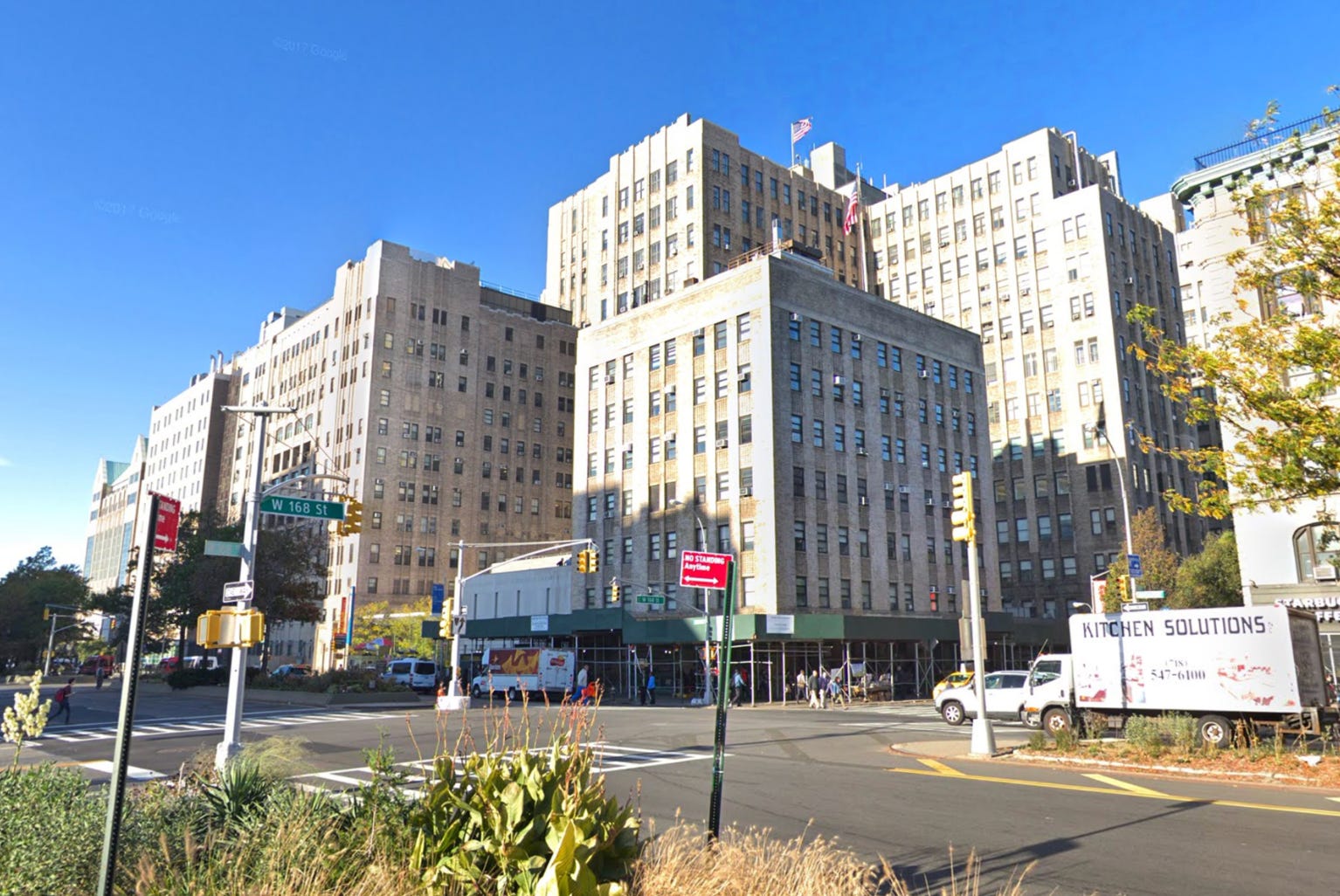
I started working at Columbia Presbyterian because Charlie Pernell hooked me up.
That’s the clean version. The story I tell people when I don’t feel like explaining how a man changed my life by pointing me in a certain direction. The version that makes it sound like it was a choice, instead of alignment and coincidence.
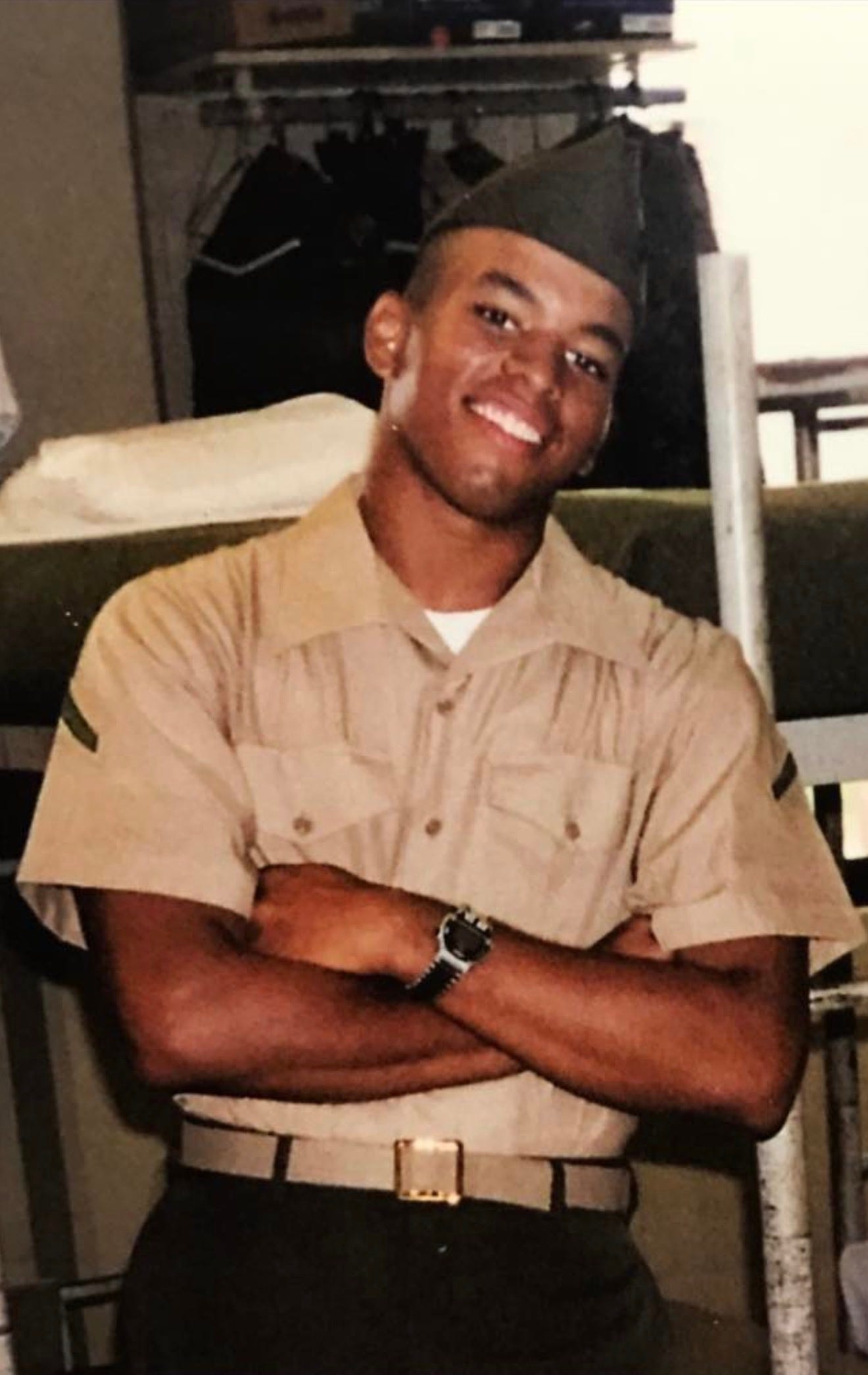
I was a kid. Nineteen, twenty tops. Straight out of boot camp, combat training, and cook school. I was a lance corporal. Hair high and tight on my skull. One of my friends kept making fun of my haircut, telling me that Parris Island landed on my head in the same tone and voice that Malcolm X declared that Plymouth Rock landed on us. I looked at everything like I either wanted to fight or fuck. No middle ground, my body flinching at everything. I hadn’t figured out how to stand without bracing for impact, waiting for someone to tell me what I’d done wrong.
That same friend kept laughing at me and swore the government put something in the eggs and coffee at Parris Island.
“They put saltpeter in your shit, yo,” he said. “To keep your dicks from getting hard and killing each other. The drill instructors. They got mind control over you, yo!”
He said it like it was classified information that had leaked sideways, half rumor, half doctrine, just believable enough to feel true.
It made me think maybe that’s why things felt a little off, but they were coming back together slowly. I was gone for less than a year, and Washington Heights hadn’t changed. Same bodegas with fish, fruit, and frituras sweating under heat lamps. Same bus exhaust hanging low in the mornings. Same domino tables slapped hard enough to sound like gunshots if you didn’t know the difference. Same Spanish arguments pouring out of open windows like music and prayer all at once. The neighborhood moved to a rhythm and language I loved. I understood the looks. I knew when a voice was rising toward violence and when it was just heated passion, pride, or too much alcohol moving too fast through veins and into a small room.
Charlie knew that was important.
Charlie was from Trinidad and had been at the hospital forever. Ten, fifteen years. Long enough that the place bent around him instead of the other way around. Even doctors lowered their voices when they said his name. Mr. Pernell, they’d call him, carefully, like his title mattered as much as theirs. He was a peace officer, which sounded like a joke until you watched him work. Deep eyes. Full lips. Thick chest. Big arms. Bodybuilder strong, and even though he always held it in, patients and visitors were afraid of him. And he was careful. The kind of man who understood that force only works if you don’t advertise it, and that once you do, you’d better be ready to live with whatever comes next.
Charlie was a November island man, a Scorpio, like me. He used to call me his Scorpio brother, saying it as both a warning and a compliment. We’re water creatures, built for depth. We like watching and listening, waiting for the right moment to move, because island people know that moving too fast, blindly, leads to mistakes.
I met Charlie when I was sixteen years old, three hundred fifteen pounds, lifting weights in a boxing gym while everyone laughed and told me I was going to die of a heart attack. That part never leaves. Grown men watching me suffer and calling me names. Calling it advice. Calling it tough love.
But Charlie never laughed. He didn’t correct anyone either. He didn’t rescue me then. He just watched. Watched my breathing. My feet. My shoulders when they began to cave. Then, when I came around to the water fountain, lungs burning, sweat soaking through my shirt, he told me to keep going.
“Keep running, baby Scorpio. Keep pushing, keep fighting.”
When I told him I wanted to join the Marines, he didn’t ask why. He told me he was a soldier. Told me his son was active duty, an Army captain in Washington, D.C., soon to be a major. Then he told me I could be a good Marine.
“You already got a jarhead, you’re going to be great,” he said.
He said it like he was predicting the weather. Like fate was a logistical detail that could be handled with discipline, silence, and time.
So when I came back standing at 6 feet and 1 inch, weighing 195 pounds of solid muscle, he wasn’t impressed. He just nodded, like I had finally caught up to what he knew. Like my suffering had aligned itself with the plan.
That’s when he told me I should come work with him at the hospital. Columbia Presbyterian.
“Become a peace officer first,” he said.
He thought it would be good for me. That the hospital would teach me things the Marines couldn’t. And if I really wanted to be an NYPD officer, the hospital was the place to train. Two years. Maybe three. Learn how to watch people without staring. Learn how to stand in rooms where no one respects you and still hold the line.
He also told me I’d be twice as valuable. He’d tell me the same things my grandfather would. A man who speaks two languages is worth two people.
Because I could speak Spanish and code-switch without thinking. Because I could talk to a Dominican grandmother one minute and a white surgeon the next and not betray either one. Because I knew when tranquilo coño meant to calm down and when it meant don’t embarrass me in front of these fucking people.
Sometimes I’d work second shift, and we’d go to Coogan’s, across the street. The old Irish cop bar. White and green on the outside, dark wood and low light on the inside. A place where doctors, cops, and boiler men went to unbutton themselves without saying much. No one ever questioned my age when I showed them my military ID. Charlie bought me my first Guinness there. Pushed it across the bar like he was handing down equipment.
“High in iron,” he said. “Put some hair on your chest.”
Charlie watched me the way he always did. Not smiling. Just measuring. Like he was checking to see if I could carry what he’d handed me. I drank it slow. Bitter. To this day, it’s still my favorite beer.
The hospital would continue what the Marines started. It would teach me how authority works when no one is watching. How violence waits patiently in rooms without uniforms. How power doesn’t announce itself. How it leans in close and whispers.
When Charlie walked me into the hospital for the first time, he walked me down the hall, past elevators that always came on time, past nurses who didn’t look up, past patients who already knew something I didn’t.
Then he stopped. Pointed.
“Go in there.”
No pep talk. No good luck. Just the handoff.
“Ask for Danny Lord. He’s waiting for you.”
You have to understand, getting into that hospital wasn’t easy. Columbia Presbyterian wasn’t just a job; it was a destination. People applied and waited years just to get a call back. Janitor. Mailroom. Transport. Administrative. Anything with an I.D. and benefits. It was like winning the lottery or finding Willy Wonka’s golden ticket folded into your palm. People built whole futures around the hope of getting inside those walls.
For me, it was easy and a stepping stone; Charlie was my hook. No waiting by the phone. No ceremony. He just walked with me and told me it was handled. Because doors don’t open by accident, someone opens them for you, and then you live with what comes next. Walking those hallways with Charlie felt like I already belonged there, like my body knew it before I did. And that’s how it always starts. Someone sees you, what’s inside, and then they turn you loose and see what survives.
Danny Lord let me into his office. It felt like a shrine. Pictures everywhere. Plaques. Frames packed tight with uniforms, handshakes, and ceremonies. Old cop stuff. New cop stuff. A life arranged on the walls so you could see the arc without asking questions.
I clocked it fast. Instinct.
A picture with Pat Lynch. One with Rudy Giuliani. One with Bill Clinton, smiling like he was mid-joke. How the hell does he know Slick Willy?
Danny sat behind his desk like he’d been doing it forever. White Irish. Late forties. Big guy. I was taller than him, but that didn’t matter. He had presence. The kind that fills a room sideways. He looked like an Irish mobster softened by time, muscle memory, and authority mixed with a strange warmth. A sprinkle of Santa Claus. A hint of Conan O’Brien. A man who could laugh with you and ruin your life in the same afternoon.
He leaned back, hands folded, comfortable in the way only men who’ve already won something are comfortable. He looked at me longer than necessary. Not hostile. Just measuring.
“So,” he said, “Miguel or Michael, which one do you like? Tell me why we should hire you.”
I didn’t rush it. Charlie had already trained me better than that. I told him Charlie thought I’d be a good addition. Said most of the staff were military, and I’d fit right in. Said I understood the culture. The hours. The silence. The hierarchy.
Then I told him I was fluent in Spanish. I watched that one land cleanly.
I told him I was born here, but Dominican from Washington Heights, overwhelmingly so. That I knew how to speak to people without escalating things. That I could translate without making anyone feel small. That I could move between worlds without announcing it.
Then I told him the truth that mattered.
I said I was a reservist at the start of my Marine contract. That I planned to finish it honorably. That one day I wanted to be NYPD, the 33rd precinct, or the 34th. Washington Heights was home; it raised me, and I wanted to be among my father’s people.
I told him that the hospital would be my second home. Not to learn how to be tough, but to learn how to be useful. To learn how to stand in it. I didn’t say it exactly like that, but I think that’s how he heard it.
Danny leaned back. Looked at me. Looked past me, at the pictures, at his own past, or maybe my future, and arranged it in pieces I couldn’t see yet. He didn’t smile. He just nodded. And that was enough. He buzzed someone in.
His colleague, a man from Loss Prevention, a department that handled things quietly, behind the scenes. For the life of me, I can’t remember his name right now. But he was the guy in charge of this team, where nothing ever happened officially, but everything happened there first.
The man looked at me differently than Danny had. Less myth. More mechanics. He asked if I knew how to write. I said yes.
Then he asked how my memory was and whether, if he put me in a room for a few minutes, I could write down everything I saw.
I said I could. I told him I had a photographic memory. No bravado. Just a fact. And I had to fight every teenage Marine instinct and urge not to say pornographic memory and crack a smile.
He brought me into a smaller room. No windows. A chair. A table. Fluorescent light humming like it might fail, but hadn’t yet. He told me to sit and observe.
So I did.
Light angles. Scuff marks. Stains half-cleaned. Coffee. Creamers. Reheated food. Papers and Post-its. Dust. The chair wobble. Radios squawking outside the door. What’s your 20? 10-2. 10-4. Footsteps passing, then fading.
I didn’t try to memorize it, it just stuck, and I let it register. After a few minutes, he handed me a clipboard and told me to write.
The images flowed from my mind and into my hands, onto the paper fast and free.
He read it slowly, aloud, checking his memory against mine.
When he finished, he looked up.
“Wow, Castillo. You can really write. You have some memory, huh?”
He asked what I studied at LaGuardia Community College.
“Liberal Arts. I want to be a photographer, like Weegee, or a writer like Mickey Spillane.”
He laughed and nodded, impressed, then told Danny he could use me in loss prevention. Cameras. Reports. Patterns.
Danny thought about it for a second. Then shook his head.
“No. This one’s a grunt. Look at him. He’s front lines. He’s ER. He’s Psych. He’s a heavyweight boxer, Golden Gloves. He’s a Marine for Christ’s sake.”
That was it. Decision made.
I didn’t know yet what that assignment would ask of me, only that it wasn’t a suggestion. It was placement. A choice made by men who had already watched others break in those rooms and decided I might not.
But Charlie Pernell knew. And Danny knew.
Once again, I didn’t argue. I nodded, instant obedience to orders. I went where I was told, thankful for the opportunity.
A week later, I was on nights.
I lived in my grandmother’s Section 8 apartment. Rent-controlled. Seventy-five dollars a month. It sounds fake now, but that’s how it was. She was usually in the Dominican Republic, living her real life. So the apartment felt like it belonged to me alone.
My bedroom was functional chaos. Kiwi Black shoeshine. Jungle boots. Camouflage. Flak jacket. Kevlar. K-Bar knives. Loose M-16 5.56 rounds. Boxing gloves soaked with Sweet Sweat.
A PlayStation 2. A loud collection of Big Black Booty Brazilians DVDs that made it clear no one’s mother was stopping by.
It was a bachelor’s paradise if your definition of paradise was no supervision and too much testosterone.
I slept when I wanted. Ate bacon cheeseburgers and Chinese food. Trained in boxing and practiced Kung Fu. I played video games, watched cop movies, and Faces of Death. I answered to no one. No parents. No kids. No wife. No bills that could really hurt me. I thought that meant freedom. I didn’t understand yet that it also meant I was really unanchored.
The day before my first tour, I barely slept. Not nerves. Just anticipation. The new uniforms and new authority made me restless. I lay staring at the ceiling, streetlights and trains cutting shadows across the room, my gear stacked like proof I’d already been something.
I shaved close, against the grain, like I was reporting to a new station. Sta-Flo in my pants and shirt, creases so sharp you could cut yourself on them. Since I was the new guy. Rookie. Single. With no one waiting at home, they put me on 1stshift, where the bad things happened. I checked myself in the mirror and tried to look like an adult who knew what he was doing.
Then I locked the door and stepped into Washington Heights. Same streets. Same noise. But a different posture.
Columbia Presbyterian was already awake. Ambulances idling. Stretchers moving fast but not panicked. People outside smoking, cigarette clouds circling, the only thing holding them together.
Inside, the air tightened. Cooler. Cleaner. Everything echoed. Every footstep made noise.
I got my radio and my assignment for the night. The ER. The hospital’s front lines.
I didn’t know yet how loud it could get. The cries and complaints. How pain stacks. How fear multiplies. How people feel when they hurt.
All I knew was that I was twenty years old, trained to react, eager to be useful, standing exactly where Charlie, Danny, and the other guy had decided I belonged.
They paired me with Officer Smitty.
Early thirties. Harlem. Smooth in a way you couldn’t teach. Pastor Mase smooth. Low Caesar fade. Sharp line. Lip gloss. Gold tooth catching the light. He acted like he was from the South, politely rude.
“So you one of them Marine super niggas, huh?”
I laughed. “Nah, man, I’m just a cook.”
“A cook? What kind of gay shit is that? Marines supposed to be killers.”
“But I am a killer, ain’t you seen Under Siege?”
He laughed. “I’m just fucking with you. A Marine is a Marine. I’m Army. You niggas was in Desert Storm with us. I fuck with the Marines. And Charlie said you good. So welcome aboard.”
And just like that, we were cool. It was summer. Thick heat that didn’t let go. 1st shift was from eleven p.m. to seven a.m.
“It’s hot tonight,” he said. “When it’s hot, somebody always comes in shot up. Watch. It’s a direct correlation. When the temperature rises, the bodies begin to drop.”
He liked using words like that, correlation, and copacetic. They made his tooth bling.
He walked me through the ER like a bomb sniffing dog. Posts. Exits. Codes. Who passed. Who didn’t. Which nurses to listen to. Which doctors whispered.
I watched. Logged everything. The side doors never stopped opening, and the revolving doors spun forever.
The first two hours were slow. Then, around one a.m., the doors blew open again. Air flowing in and out.
A girl named Maria, in a Puerto Rican flag shirt, was holding up a young man. Blood everywhere.
“They stabbed him, like ten times, he’s gonna die, help, please!”
The doors closed, and the air suctioned from the hallway and sally port.
Smitty stood quick.
“Here we go, Castillo. Cowboy the fuck up.”
My brain stalled, but my training didn’t.
I moved. Cleared space. Guided them to triage. Blood everywhere. In her hair, on her shirt, across her hands. I stepped back, then hesitated. I froze for a second. Universal precautions. Disease. AIDS. Hepatitis. All the things they teach you for when you run towards the mess.
Smitty yanked me back.
“Sally port. Out back. Now. Don’t let anyone in. The guys who did this, they might be following. They’ll try to sneak in, say they’re family or something. Under no circumstances: no one gets in.”
And just like that, the ER wasn’t a hospital anymore. It was a perimeter. I slipped into something familiar, ready to locate, close with, and destroy if I had to. All I had was a baton and handcuffs, but my body knew what to do before my mind caught up.
I stood outside, hyper-alert. Every sound sharpened. Sirens wailed without stopping. Police and EMTs cracked jokes, laughed, and smoked. The night kept moving like nothing had happened. And I stood there for about an hour. Maybe more. But no one came.
The danger dissolved the way it often does. Quietly, and without explanation, leaving only the tension behind, with nowhere to go.
Then Smitty called me in over the radio.
“Unit 21, 10-2 Crash Room, stand there, don’t let anyone in again.”
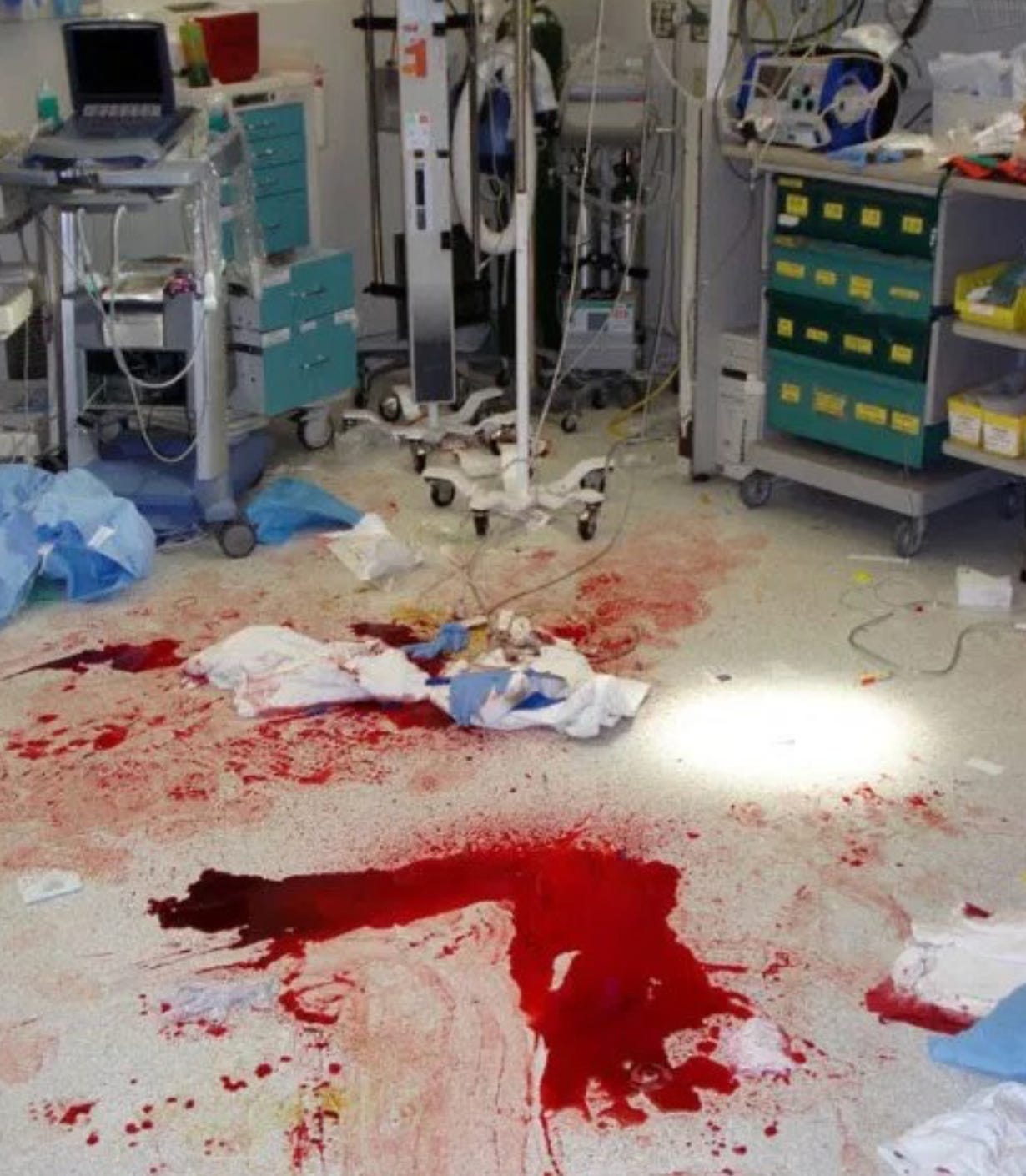
The room was empty. Too empty. The young man had been pronounced dead. He was naked except for his boxer briefs. Blood settled. Tattoos everywhere, even on his face. A whole life written on a body no longer using it.
I stepped inside and couldn’t take my eyes off him. It wasn’t the first time I’d seen a dead body, but it was the first time I had seen new death, death that felt alive and present, like it might speak if I spoke to him.
He was so young. And handsome. Tan skin, darker than mine. Straight, long hair tied back. He looked Taíno, pure lines, old blood. Strong jaw. A long bridge of a nose that felt ancestral, like it belonged to a face carved before anyone ever called this place a hospital.
The room hummed with electricity. Machines still blinked and chirped out of habit, like no one had told them their job was finished. Overhead, the surgical lights burned hard and unforgiving, bleaching everything into clarity, into hi-def. Screens glowed softly. Lines pulsing and flatlining. The air machine pushing and pulling, in and out, in and out. Darth Vader breaths. I felt like a kid in awe of all the gadgets.
The lights kept shining down in streaks, weirdly beautiful, and that’s what frightened me. It felt clean, almost holy. Like when you’re wearing those protective lenses at the dentist’s office and the hygienist shines the halogen bulb into your eyes by mistake. It deepened the blood, sharpened the tattoos, turned the body into something deliberate, an offering of some sort. His arms lay open, not pleading but misplaced, a figure composed for reverence. Blood was slowly dripping from both armpits, a trio of small puncture wounds, onto Wee-Wee pads. He looked like Jesus with the thorns, but emptied of meaning, of suffering, and of salvation. Just a presentation. A body waiting for witnesses who never came. Where was his Mary, the girl who carried him in?
I felt completely alone. No co-workers. No doctors. No family. No prayers. Just the beeping, the hum, the mechanical breathing that kept moving even though he wasn’t.
I always had one of those disposable 35mm Kodaks on me. I wanted to take a picture, and I might have passed it around like evidence or a warning. But I didn’t. I stood there and let it fix itself inside me. My pornographic memory. The light. The body. The Force. The moments after the heat had spent itself, after the summer night had said its last words, and the room started to breathe on its own again.
Smitty came back and relieved me. “Yo, Jarhead, take a walk.”
Outside, the night pressed up against the building, hot, restless, carrying the same air that had delivered the tattooed man. Summer and violence working together. More cigarette smoke whooshed in and out every time the sally port doors opened and closed.
I stood there, just twenty years old, uniform still stiff on my body, learning that proximity was its own kind of responsibility.
After that, I finished the night walking the rest of the ER. Scanning. Listening to the patients. Posting up. My nostrils honed in. Counting bodies without making it obvious. Watching hands. Watching faces. Listening to our radios crackle. Letting the ER open and close its mouth again and again, swallowing people and spitting them back out differently.
Then the sunlight spilled down from the Bronx and onto us. Morning revived everything it touched. The edges softened. The violence retreating into the shadows. And seven a.m. came like a wave, like cavalry horns in the distance and the day shift arrived with clean uniforms and hot cups of coffee, talking to us like we hadn’t just spent the night inside a war.
And then there was Charlie Pernell. Big shoulders. Big arms. Big smile. He slapped my chest hard and looked me straight in the eye.
“Baby Scorpio, how was your first day?”
I opened my mouth, and nothing came out. I was lost for words.
“Never better,” I said, smiling.
I told him I’d see him at the gym, went home, and fell asleep.
Miguel A. Castillo Jr. is a writer and boxing coach based in New York. A former U.S. Marine, NYPD officer, and prison inmate, he was born in Hell’s Kitchen and raised in Harlem and Washington Heights by a Dominican family. His work explores masculinity, violence, and American systems from the inside. He holds an MFA in Creative Writing from NYU and is completing a second MFA in Screenwriting at Manhattanville University.
That might have brought back so many emotions. Wonderfully penned down
Wow this is powerful. Beautifully written.